 Add to Chrome
 Add to Firefox
 Add to Edge
SKETCH: Semantic Key-Point Conditioning for Long-Horizon Vessel Trajectory Prediction
Jan 26, 2026
Accurate long-horizon vessel trajectory prediction remains challenging due to compounded uncertainty from complex navigation behaviors and environmental factors. Existing methods often struggle to maintain global directional consistency, leading to drifting or implausible trajectories when extrapolated over long time horizons. To address this issue, we propose a semantic-key-point-conditioned trajectory modeling framework, in which future trajectories are predicted by conditioning on a high-level Next Key Point (NKP) that captures navigational intent. This formulation decomposes long-horizon prediction into global semantic decision-making and local motion modeling, effectively restricting the support of future trajectories to semantically feasible subsets. To efficiently estimate the NKP prior from historical observations, we adopt a pretrain-finetune strategy. Extensive experiments on real-world AIS data demonstrate that the proposed method consistently outperforms state-of-the-art approaches, particularly for long travel durations, directional accuracy, and fine-grained trajectory prediction.

From Specialist to Generalist: Unlocking SAM's Learning Potential on Unlabeled Medical Images
Jan 25, 2026Foundation models like the Segment Anything Model (SAM) show strong generalization, yet adapting them to medical images remains difficult due to domain shift, scarce labels, and the inability of Parameter-Efficient Fine-Tuning (PEFT) to exploit unlabeled data. While conventional models like U-Net excel in semi-supervised medical learning, their potential to assist a PEFT SAM has been largely overlooked. We introduce SC-SAM, a specialist-generalist framework where U-Net provides point-based prompts and pseudo-labels to guide SAM's adaptation, while SAM serves as a powerful generalist supervisor to regularize U-Net. This reciprocal guidance forms a bidirectional co-training loop that allows both models to effectively exploit the unlabeled data. Across prostate MRI and polyp segmentation benchmarks, our method achieves state-of-the-art results, outperforming other existing semi-supervised SAM variants and even medical foundation models like MedSAM, highlighting the value of specialist-generalist cooperation for label-efficient medical image segmentation. Our code is available at https://github.com/vnlvi2k3/SC-SAM.
Zero-Shot Function Encoder-Based Differentiable Predictive Control
Nov 11, 2025We introduce a differentiable framework for zero-shot adaptive control over parametric families of nonlinear dynamical systems. Our approach integrates a function encoder-based neural ODE (FE-NODE) for modeling system dynamics with a differentiable predictive control (DPC) for offline self-supervised learning of explicit control policies. The FE-NODE captures nonlinear behaviors in state transitions and enables zero-shot adaptation to new systems without retraining, while the DPC efficiently learns control policies across system parameterizations, thus eliminating costly online optimization common in classical model predictive control. We demonstrate the efficiency, accuracy, and online adaptability of the proposed method across a range of nonlinear systems with varying parametric scenarios, highlighting its potential as a general-purpose tool for fast zero-shot adaptive control.
DiLO: Disentangled Latent Optimization for Learning Shape and Deformation in Grouped Deforming 3D Objects
Nov 08, 2025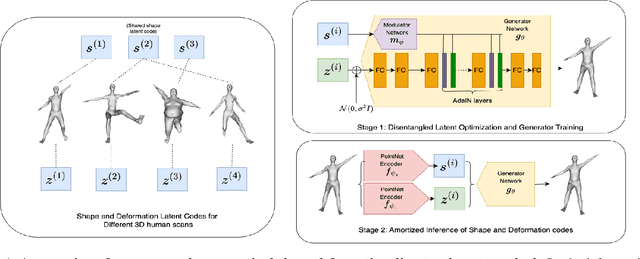
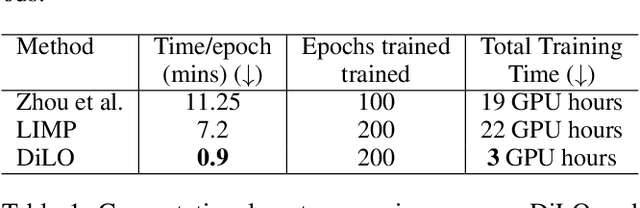
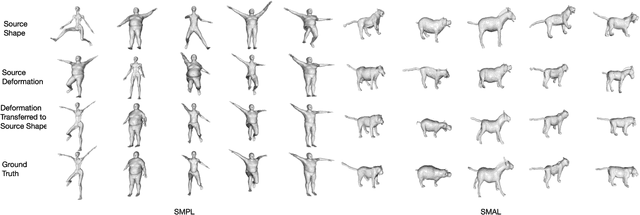
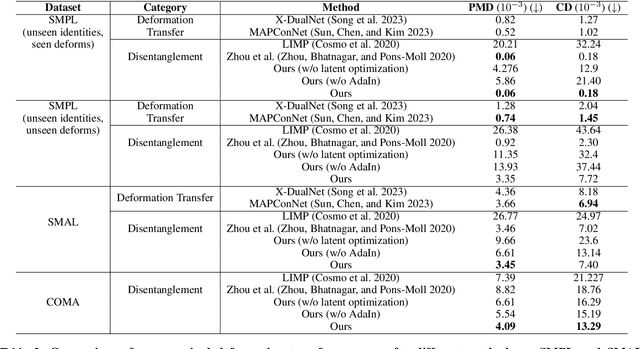
In this work, we propose a disentangled latent optimization-based method for parameterizing grouped deforming 3D objects into shape and deformation factors in an unsupervised manner. Our approach involves the joint optimization of a generator network along with the shape and deformation factors, supported by specific regularization techniques. For efficient amortized inference of disentangled shape and deformation codes, we train two order-invariant PoinNet-based encoder networks in the second stage of our method. We demonstrate several significant downstream applications of our method, including unsupervised deformation transfer, deformation classification, and explainability analysis. Extensive experiments conducted on 3D human, animal, and facial expression datasets demonstrate that our simple approach is highly effective in these downstream tasks, comparable or superior to existing methods with much higher complexity.
Semi-MoE: Mixture-of-Experts meets Semi-Supervised Histopathology Segmentation
Sep 17, 2025Semi-supervised learning has been employed to alleviate the need for extensive labeled data for histopathology image segmentation, but existing methods struggle with noisy pseudo-labels due to ambiguous gland boundaries and morphological misclassification. This paper introduces Semi-MOE, to the best of our knowledge, the first multi-task Mixture-of-Experts framework for semi-supervised histopathology image segmentation. Our approach leverages three specialized expert networks: A main segmentation expert, a signed distance field regression expert, and a boundary prediction expert, each dedicated to capturing distinct morphological features. Subsequently, the Multi-Gating Pseudo-labeling module dynamically aggregates expert features, enabling a robust fuse-and-refine pseudo-labeling mechanism. Furthermore, to eliminate manual tuning while dynamically balancing multiple learning objectives, we propose an Adaptive Multi-Objective Loss. Extensive experiments on GlaS and CRAG benchmarks show that our method outperforms state-of-the-art approaches in low-label settings, highlighting the potential of MoE-based architectures in advancing semi-supervised segmentation. Our code is available at https://github.com/vnlvi2k3/Semi-MoE.
Describe Anything Model for Visual Question Answering on Text-rich Images
Jul 16, 2025Recent progress has been made in region-aware vision-language modeling, particularly with the emergence of the Describe Anything Model (DAM). DAM is capable of generating detailed descriptions of any specific image areas or objects without the need for additional localized image-text alignment supervision. We hypothesize that such region-level descriptive capability is beneficial for the task of Visual Question Answering (VQA), especially in challenging scenarios involving images with dense text. In such settings, the fine-grained extraction of textual information is crucial to producing correct answers. Motivated by this, we introduce DAM-QA, a framework with a tailored evaluation protocol, developed to investigate and harness the region-aware capabilities from DAM for the text-rich VQA problem that requires reasoning over text-based information within images. DAM-QA incorporates a mechanism that aggregates answers from multiple regional views of image content, enabling more effective identification of evidence that may be tied to text-related elements. Experiments on six VQA benchmarks show that our approach consistently outperforms the baseline DAM, with a notable 7+ point gain on DocVQA. DAM-QA also achieves the best overall performance among region-aware models with fewer parameters, significantly narrowing the gap with strong generalist VLMs. These results highlight the potential of DAM-like models for text-rich and broader VQA tasks when paired with efficient usage and integration strategies. Our code is publicly available at https://github.com/Linvyl/DAM-QA.git.
Visual Instance-aware Prompt Tuning
Jul 10, 2025Visual Prompt Tuning (VPT) has emerged as a parameter-efficient fine-tuning paradigm for vision transformers, with conventional approaches utilizing dataset-level prompts that remain the same across all input instances. We observe that this strategy results in sub-optimal performance due to high variance in downstream datasets. To address this challenge, we propose Visual Instance-aware Prompt Tuning (ViaPT), which generates instance-aware prompts based on each individual input and fuses them with dataset-level prompts, leveraging Principal Component Analysis (PCA) to retain important prompting information. Moreover, we reveal that VPT-Deep and VPT-Shallow represent two corner cases based on a conceptual understanding, in which they fail to effectively capture instance-specific information, while random dimension reduction on prompts only yields performance between the two extremes. Instead, ViaPT overcomes these limitations by balancing dataset-level and instance-level knowledge, while reducing the amount of learnable parameters compared to VPT-Deep. Extensive experiments across 34 diverse datasets demonstrate that our method consistently outperforms state-of-the-art baselines, establishing a new paradigm for analyzing and optimizing visual prompts for vision transformers.
CryoCCD: Conditional Cycle-consistent Diffusion with Biophysical Modeling for Cryo-EM Synthesis
May 29, 2025Cryo-electron microscopy (cryo-EM) offers near-atomic resolution imaging of macromolecules, but developing robust models for downstream analysis is hindered by the scarcity of high-quality annotated data. While synthetic data generation has emerged as a potential solution, existing methods often fail to capture both the structural diversity of biological specimens and the complex, spatially varying noise inherent in cryo-EM imaging. To overcome these limitations, we propose CryoCCD, a synthesis framework that integrates biophysical modeling with generative techniques. Specifically, CryoCCD produces multi-scale cryo-EM micrographs that reflect realistic biophysical variability through compositional heterogeneity, cellular context, and physics-informed imaging. To generate realistic noise, we employ a conditional diffusion model, enhanced by cycle consistency to preserve structural fidelity and mask-aware contrastive learning to capture spatially adaptive noise patterns. Extensive experiments show that CryoCCD generates structurally accurate micrographs and enhances performance in downstream tasks, outperforming state-of-the-art baselines in both particle picking and reconstruction.
SaSi: A Self-augmented and Self-interpreted Deep Learning Approach for Few-shot Cryo-ET Particle Detection
May 26, 2025Cryo-electron tomography (cryo-ET) has emerged as a powerful technique for imaging macromolecular complexes in their near-native states. However, the localization of 3D particles in cellular environments still presents a significant challenge due to low signal-to-noise ratios and missing wedge artifacts. Deep learning approaches have shown great potential, but they need huge amounts of data, which can be a challenge in cryo-ET scenarios where labeled data is often scarce. In this paper, we propose a novel Self-augmented and Self-interpreted (SaSi) deep learning approach towards few-shot particle detection in 3D cryo-ET images. Our method builds upon self-augmentation techniques to further boost data utilization and introduces a self-interpreted segmentation strategy for alleviating dependency on labeled data, hence improving generalization and robustness. As demonstrated by experiments conducted on both simulated and real-world cryo-ET datasets, the SaSi approach significantly outperforms existing state-of-the-art methods for particle localization. This research increases understanding of how to detect particles with very few labels in cryo-ET and thus sets a new benchmark for few-shot learning in structural biology.
AutoMiSeg: Automatic Medical Image Segmentation via Test-Time Adaptation of Foundation Models
May 23, 2025Medical image segmentation is vital for clinical diagnosis, yet current deep learning methods often demand extensive expert effort, i.e., either through annotating large training datasets or providing prompts at inference time for each new case. This paper introduces a zero-shot and automatic segmentation pipeline that combines off-the-shelf vision-language and segmentation foundation models. Given a medical image and a task definition (e.g., "segment the optic disc in an eye fundus image"), our method uses a grounding model to generate an initial bounding box, followed by a visual prompt boosting module that enhance the prompts, which are then processed by a promptable segmentation model to produce the final mask. To address the challenges of domain gap and result verification, we introduce a test-time adaptation framework featuring a set of learnable adaptors that align the medical inputs with foundation model representations. Its hyperparameters are optimized via Bayesian Optimization, guided by a proxy validation model without requiring ground-truth labels. Our pipeline offers an annotation-efficient and scalable solution for zero-shot medical image segmentation across diverse tasks. Our pipeline is evaluated on seven diverse medical imaging datasets and shows promising results. By proper decomposition and test-time adaptation, our fully automatic pipeline performs competitively with weakly-prompted interactive foundation models.